Author Archives: admin

Pig Dogs

No, it’s not about a Monty Python insult, well maybe a little.  Why does Peter end the second chapter of his second letter with bashing dogs and pigs?  It is difficult for us to understand what these animals represented to the ancient Israelites, because today these are two of our favorite creatures.  Bacon posts seem to have taken over Facebook and, in Bozeman at least, everyone seems to have at least one of man’s best friend.  But this was the opposite of an Israel under God’s Torah.  God repeats the theme of ‘you are my people, set apart’ over and over in the Pentateuch.  Part of that was a focus on clenliness which was a visual metaphor for holiness.  You serve a holy God so you will show it by being clean . Leviticus 10:10,11 This meant staying away from food that lived in the dirt. It even goes back to Genesis when God curses the serpent “the dust you shall eat. So durt immediately brings pigs to mind, but it also includes shellfish and reptiles.  There is also an emphasis on things which associate with carcases of unclean or even clean animals.  As most dog owners know dogs love to roll in filth and dead carcases, in addition Leviticus 11:27 calls them out as unclean, not to mention the vomit.  Which brings us to Peter’s mentioning of them.  Even to this day the middle east has very little respect for dogs, or pigs.  Typical dogs are mangy and roam the streets only to flee as people throw rocks at them, pigs are the ultimate insult.  We still have much of this in our language.  We have many insults about both these creatures.  As a side note ‘son of’ whatever is a phrase which means ‘the ultimate representative of’ so we have ‘Son of God’ often as the ultimate representative of God, or ‘son of a dog’ or Monty Python’s ‘son of a silly person’ as their respective insults.  The nature of these animals is uncleanness, just like the false teachers, or the fools conjured by the Proverbs 26:11 passage Peter alludes to.  So, try to avoid being the son of a heretic, for you are a people set apart as holy.

Who was Judas Iscariot?

Judas, Study for the Last Supper, Leonardo da Vinci

After two centuries of mythopoeia (see a future post I have not written, or G.K. Chesterton, on myth) surrounding this sinister character we more or less throw everything at him and no one really objects.  Maybe we are in good company John 12:6 but I think he has gotten a bad wrap, and we may be more like him than we like to think.

javert_croweI really think Judas is a lot like Inspector Javert from Les Miséserables.  He lived by a code of justice, which was for the most part honorable.  He upheld a duty to the law and fought for what was right.  But in the end he couldn’t understand the path of forgiveness and sacrifice layed out by our Lord.  Rather than repent and change his way of thinking, he committed suicide.  Similar to Judas.  Judas was ready to go to war to stop the tyrrany of Rome.  He wanted to see his people freed and the true King ascend to the throne.  These were all good things.  But he wanted to do it his way, Satan’s way, with no suffering.  We often seek this path as well.  Jesus cried out to his father in the garden asking if there was another way.  And there was, there was what Satan had offered him in the desert.  A kingdom with no death and suffering necessary, or so it seemed.  But our Lord prevailed and chose the path of suffering, that his Father might lift him up in victory.

There are many ways we can choose the easy way, which seems to get us what we want quickly with no humble sacrifice, with no suffering.  We try to get food we didn’t earn, maybe not direct theft but we steal it from our kids with pension plans or inflation or we steal from our neighbors by taking government handouts.  We want sex without the hard work of marriage and children.  We want a good job, for our family, so we lie a little on a resume.  We want to keep our job so we let others suffer unjustly so we don’t risk sticking our neck out.  “It’s all for the children.”  We want good goals but we want to get there our way, right now, instead of God’s way.  We want to eat of the tree of the knowledge of good and evil, now, instead of in God’s time.  This is the root of much Sin.  This brings to mind Peter in the garden cutting off the hight priests’ ear.  He was ready to bring in the kingdom, without Jesus dying, that was not The Plan.  So he acted as Satan, he acted as Judas.  I’m sure Judas was as surprised as anyone when Jesus was arrested.  He thought he could force Jesus’ hand into rising up and ushering in the an earthly kingdom.  But when faced with the fact that his paradigm was incorrect, he chose suicide rather than repentance.  Judas was a heretic in the sense mentioned previously, he had no direct followers, but we can be his followers when we try to find our own shortcuts to the blessings of this world.

“Truly, truly, I say to you, unless a grain of wheat falls into the earth and dies, it remains alone; but if it dies, it bears much fruit.” – John 12:24

Javert on the Precipice

Javert on the Precipice

Apostasy vs. Heresy

‘Apostasy’ is not a word we use much these days, even less ‘heresy’.  At Grace they use the word ‘apostasy’ which is someone who has abandoned the faith, and ‘apostate false teacher’ someone who not only leaves but goes on to teach false doctrine.  These ideas are present in scripture. 1 John 2:19 is the idea of apostasy.  But I think historically the church has used a better word for those who actively teach false doctrine. Christ warned us of them in Matthew 7:15  They often do not believe they have left the faith, and even fight for their beliefs.  They are those who start denominations or cults. They are the Heretics.   Which I believe is the most accurate contemporary term for what Peter is talking about in II Peter 2  He even opens the chapter with the greek word that has become the basis for our word heresy.  In the Greek it was “a taking or choosing”.

The church has battled many such persons throughout the centuries.  In the USA we have the common ones the Mormons, Christian Scientist, Seventh-day Adventists and Jehovah’s Witnesses.  But if there is a battle today, between the church and these heresies it is a cold war.  There is, however, a heresy that is alive and well, and the battle is as hot as ever.

Born in the year 570, we don’t often think of his followers as heretics.  He was certainly a false prophet of the type our Lord warned us about in Matthew.  In fact his followers call him an-Nâbî, “the Prophet”.  He is Muhammad.  It may sound strange to many to refer to Islam as a Christian heresy but that really is the best explanation.

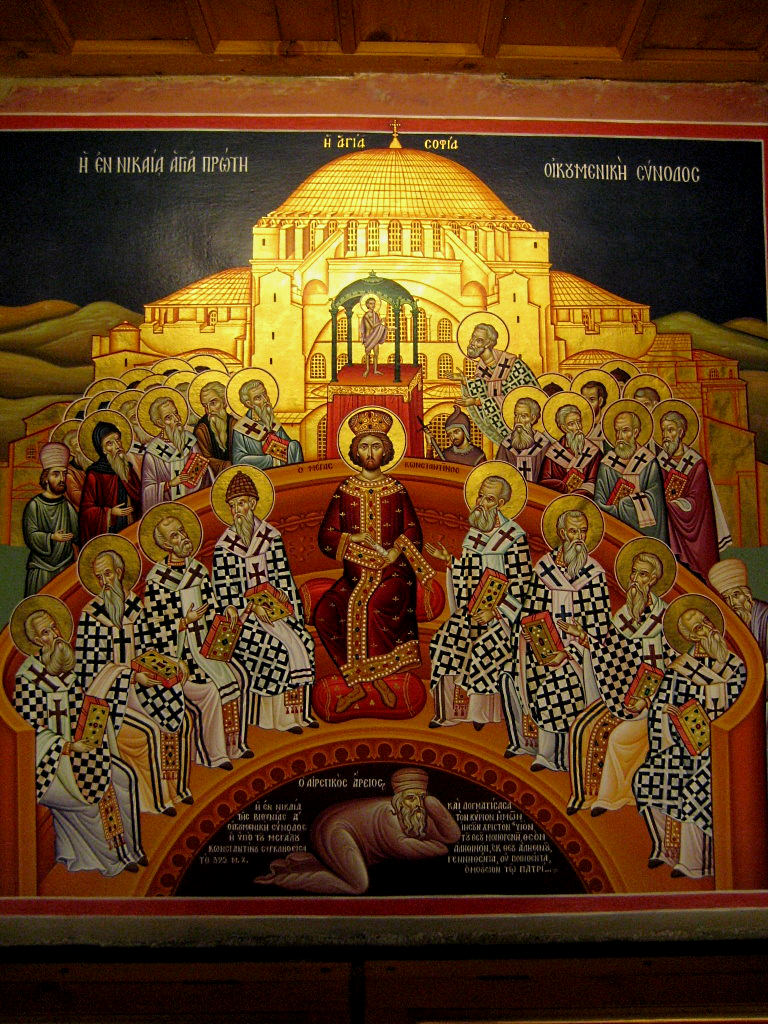
First of all what is your definition of heresy?  If you compared the doctrine of the groups above or even historical heresies it is in full agreement in 90 percent of doctrine.  For the most part these groups agree.  But that last 10 percent is crucial. Heresy is that which is almost right but not quite.  Theologians like to point out that the first great heresy came down to a single letter, homoiousios (alike in substance) vs homoousios (the same substance).  But that one letter makes a lot of theological difference.  To the modern non-militant Christian this seems silly, this is what has led to the modern day movement to unite all the sects, agree on what we can agree on and live in peace and milky apathetic harmony.  Well they have simply forgotten their history, men fought and died to maintain orthodoxy for hundreds of years, shall we consider their lives meaningless?  I think not.

Second, Muhammed is the poster child for what Peter is talking about in the second chapter of his second epistle. v. 2 many will follow…because of them the way of truth will be reviled v. 14 They have eyes full of adultery, insatiable for sin,  v.18 they entice with licentious passions of the flesh, v. 19 they promise freedom but they themselves are slaves of corruption.  But the connection is not just in general.  Muhammed studied Christianity, he appreciated it’s structure and marveled at the way it spread so fast and so strongly throughout the world. He wanted this for himself, much like Simon the Sorcerer, he wanted to adapt Christianity for his use.  And he did.  Muhammedans beleive in Jesus and his teaching, but they believe that the bible was corrupted and that Muhammed’s writings are necessary to clarify and fix those corruptions.  You might not think there is much in common between Christianity and Islam.  But there are many paths by which can strike up a conversation and lead to the true gospel.

Further Reading: The Great Heresies, Hilaire Belloc  http://www.cs.cmu.edu/~spok/metabook/heresies.html
Icon from the Mégalo Metéoron Monastery in Greece, representing the First Ecumenical Council of Nikea 325 A.D., with the condemned Arius in the bottom of the icon.

Letter to the Editor 6/4/2007

This past Sunday I found myself about town engaged in commerce.  Which, from what I can tell, has unfortunately become the new religion of our society.  At any rate there was an air of something different about town.  And no, I am not referring to all the road construction.  It was something pleasant a breath of fresh air a reprieve from what our culture has become.  It was any number of young women living up to that title, adorned in summer dresses.  No doubt going to or from graduation or the first  barbecues of the year.  Not in any way provocative, simply feminine.  Yes feminine, that fine element of humanity which has been all but smothered in our culture.  Strange enough the group responsible has taken the name ‘feminist’  though they would more rightly be called ‘masculinists.’  Now I, in the spirit of a true feminist would like to thank these young ladies, and perhaps their mothers, for hanging on to a simple timeless idea that men and women should take joy in their God-given sex.